STEPAM Approaches Presented at Goce Delčev University in Štip
As part of a CEEPUS teaching mobility, Prof. Aleksandar Ignjatović visited the Faculty of Educationa…
The current status of societies in all parts of the world is characterized by technological development and an overall decrease in Physical Activity levels (WHO, 2018, 2022).
The World Health Organization (WHO) reports that the extent of the obesity problem in Europe has reached “epidemic proportions.” The obesity rates are “still escalating,” meaning that no European country will hit 2025 WHO NCD target to stop the increase in overweight and obesity rates. Statistically, Serbia is among the five European countries hardest hit by the epidemic (WHO European Regional Obesity Report 2022).
Physical Education (P.E.) in school is the only sure opportunity for every school-age child to access health-enhancing physical activities. It is estimated that for over 80% of children, P.E. is their only physical activity during the day (EC, 2015).
It is formally recognized as a mandatory subject in the curricula in all European countries. The relative share of time allocated to P.E. is around 9–10% but some countries have even less than 5%, even in primary education. The majority of countries dedicate an even smaller share of time in secondary education to P.E. (EACEA/Eurydice, 2013).
Additionally, there are many problems with the implementation and realization of P.E. classes in schools. Many elementary school teachers consider P.E. as a nonessential subject and put it beside the main focus of school education. In order to respond to the increased demands for achievements in core subjects, teachers often devote more time during total school time to those subjects and decrease the time for nonessential subjects such as physical education (Center on Education Policy, 2008).
The situation is similar to that of most European countries where perceived importance and total teaching time allocated to physical education is lesser compared to other subjects (EACEA/Eurydice, 2012b).
At the same time, there is a need to produce more skilled workers in the areas of science, technology, engineering, and mathematics (STEM). In order to support growing technological innovation and digitalization, it’s important to increase and maintain the positive exposure and experiences of STEAM field students.
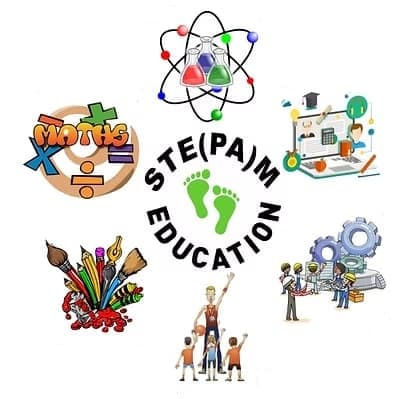
With an increasing need for more physical activity in school systems a potential solution could be found in the wider integration of STEAM concepts in the educational system. This concept develops students’ competencies (problem-solving, creative thinking, digital competencies, functional knowledge etc.) as important for life in a dynamic and constantly changing society.
Our Erasmus+ KA2 project Teacher Training in Physical Activities and Embodied Learning through STEAM Education aims to develop STEAM Program with Physical Activities examples and guidelines.
It will provide teacher training in physical activities and embodied learning through STEAM education.
By integrating STEAM with physical activities, students can learn in a more engaging and effective way.
Our program will equip teachers with the necessary skills and knowledge to implement this approach in their classrooms.
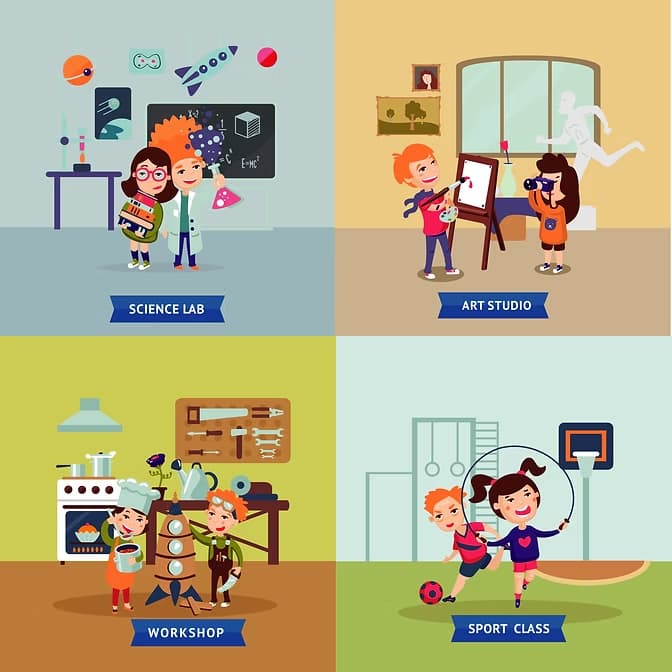
Physical activity has been shown to have a positive impact on cognitive function, academic performance, and mental health. Our project aims to provide teachers with the tools to incorporate physical activities into their STEAM lessons and promote a healthy learning environment.
Embodied learning is an approach that emphasizes the use of the body and movement in the learning process. By combining embodied learning with STEAM education, we can create a dynamic and engaging learning experience for students.
As part of a CEEPUS teaching mobility, Prof. Aleksandar Ignjatović visited the Faculty of Educationa…
The Faculty of Education in Jagodina successfully organised the international conference “The STEPAM…
At the 9th International TeachMeet at BETT 2026, held on-site at ExCeL London, United Kingdom, Dr. K…
Dr. Kristóf Fenyvesi led a one-week intensive AI-in-education professional development programme for…
STEPAM activities were explored during the Blended Intensive Programme Exploring STE(A)M Through Stu…
Prof. Aleksandar Ignjatović presented the STEPAM project at the 35th Forum of the European Physical …